As regular visitors to our Strictly blog will know, I'm currently working on a British thriller series. We featured author Carl Ashmore on this blog a while ago and when I heard that he'd finished writing the last of his Time Hunter books I invited him back for a chat. Here, he offer some insights into his experience.
Carl Ashmore's Time Hunters series
As regular visitors to our Strictly blog will know, I'm currently working on a British thriller series. We featured author Carl Ashmore on this blog a while ago and when I heard that he'd finished writing the last of his Time Hunter books I invited him back for a chat. Here, he offer some insights into his experience.
Self-Promotion: A Guide to How Not To Do It
Part of the reason I am a particularly unsuccessful self-published author is the fact that I'm also a terrible self-publicist and/or marketeer. And then...
What's the story, Sam?
Guest Author Leigh Russell : Living the Dream from a Walk in the Park!
Since the publication of Cut Short, I am frequently approached to give
author talks. The first reading group I visited were interested to hear about
Road Closed, the second book in the series I found myself writing. My audience
were all disappointed to hear that I had given Geraldine Steel a different
sergeant in Road Closed. "But we like Ian Peterson," they chorused.
Always keen to please, I duly reinstated Ian Peterson as Geraldine Steel's
detective sergeant; little dreaming that he would one day feature in his own
series.
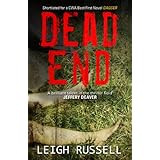
I was initially offered a three book deal. In Cut Short, Road Closed and
Dead End, Geraldine Steel works for the Kent constabulary. Following the
success of all three titles, my publisher offered me a second three book deal.
In Death Bed and Stop Dead, Geraldine has moved to London, leaving her sergeant
behind. So when my publisher wanted to explore the possibility of my writing
two books a year, a spin off series for Ian Peterson was the obvious answer.
The new series launches this year with Cold Sacrifice.Guest and Debut Author Sarah Painter talks to Strictly Writing about her book 'The Language of Spells'
Doin' the e-Math
Okay then, so half of me (and this is where my *maths gets REALLY shonky) thought maybe I'd have a lucky break and my Big Brave Move would be the absolute making of me; I'd soar the dizzy heights of self-publishing stardom and I'd have the world eating out of the palm of my hand-held-e-reader.
Another half of me was dissecting the world of writing whilst breaking blueberry muffins with Kerry Wilkinson and Amanda Hocking in Starbucks. And the other half (*see what I mean?) was rocking plaintively and dismally in the darkest recesses of the smallest room in the house wondering what the hell had possessed me to be so utterly reckless in the first place.
Because I hadn't a clue what to expect and equally hadn't a clue how to 'promote' the fact that I'd done it - or even if I should promote the fact I'd done it at all. And anyway, what would 'friends' on Facebook think? *in my head* "Oh ffs, there she goes, she can't get an Agent, she's clearly plummeted the depths of desperation and she's self-published. I'd better 'like' it and say I'll buy it just to make her feel better". And that wasn't what I wanted. Not what I wanted at all.
I am not one of life's natural 'sellers'. Give me a vanful of double glazed windows and I will paint pretty pictures on them rather than push them on unsuspecting members of the public. Give me a bag full of leaflets to hand out and I'll turn them into swans and fans in lieu of squashing them into unyielding palms of strangers. Give me a market stall and instead of bawling "Grabba bargain over here love, pound of spuds fer a pound!" I'll hand out steaming cups of tea and slices of cake and have chats with anybody who feels like stopping by. In short, I don't 'do' selling. If somebody wants something, they will, as Darwin would probably corroborate, go out and look for it and ask for advice if they need it. After all, that's what I'd do.
So I didn't want to make a song and dance. I wanted my words to just be Out There. Like they would've been had they been printed on paper and bound and wrapped in a lovely enticing cover and placed nicely on a shelf in a bookshop. Only the e-way. And anyway my Facebook friends weren't my target audience. Hell, some of them don't even know what a book is *waves to husband*. So I did a couple of 'Promo's i.e. I put my books on for free for a 24 hour or 48 hour stretch to see what would happen.
And guess what?
The figures speak for themselves.
So, when I've promo'd my book for free on the 3 days that I've done it (Amazon do their own freebie days and authors get 5 days per month of their own choosing) the 'sales' figues have absolutely rocketed (*see above*). BUT this doesn't mean that the book is getting read. We've all done it - I'm not without blame. If there's a free read going and the opening sample is interesting enough and makes me want to read on, then I'll download it. I might not read it right now, but I have it on my system ready for when I remember it's there and I need something to read.
And it's this little spark of knowing that somewhere someone has - during the free promo at least - read the opening sample of my books and thought 'yeah, that looks good enough to save for later' and has gone to the trouble of actually bothering to press a few keys and downloaded it for ... whenever. I don't mind. It's out there and even if it never gets read or reviewed, I know that for a few brief minutes it was worth it - because they thought that it was.
p.s. I won't mention the very hurtful (and ambiguous) "units refunded" column on the download report and how I'm automatically drawn to the *1* that sits sadly in that list. I have already assumed the worst. It was such a sh*t read that the purchaser felt compelled to demand the 99p refund or it was an accidental download which wasn't even worth keeping as a back-up... sometimes I really don't like the Math 'cos the imagination gets way too involved.
p.p.s I've just added it up and I'm averaging approx £5.38/month in 'royalties'. I'm sure that must say something but I don't think I'm listening!
From Kindle to publisher by Deborah Durbin, freelance writer, journalist and bestselling author
I was commissioned to write an article about the new Kindle that had hit our shops just in time for Christmas and I decided to upload my novel to see just how easy it was for someone to publish with Amazon’s Kindle Direct Publishing system. Within four weeks my book had hit the number one slot in the supernatural category and number 37 in women’s fiction and I started earning 70% in royalties – a much bigger percent than any of my 11 traditionally published books.
My digital sales are around 150 copies per week, but I still wanted to see my book as a proper paper book, so when I spotted an announcement in a writing magazine, just before Christmas last year, announcing that Soul Rocks, an imprint of John Hunt Publishing were looking for new titles in the paranormal romance genre, I sent Oh Great to them.
At the beginning of February I received an email from John Hunt offering me a publishing contract for my novel. Part of the contract included digital rights, but because my ebook sales were already doing well for me I managed to negotiate to keep those rights and signed for just print rights. My novel should be out in print at the end of the summer. The fact that Oh Great had good digital sales helped I think, in the publisher’s decision to take it on under their wing and I can’t wait to see it in print form.
The moral of this story is if you have a book that has done the usual rounds of publishers and agents in the Writers’ and Artists’ Handbook and has come bouncing back faster than a boomerang, try it on Amazon Kindle, market it on social networks, price it under the £1.99 mark and it’s highly likely that you will generate good sales, which you can then show to a mainstream publisher.
The key to remember is that agents and publishers do not always know what will sell. Each agency or publishing company can only take a chance on a small amount of new titles. The people that do know are the readers and if your books are available to a worldwide audience, waiting to read new titles, you can prove that your books are being read and enjoyed, which in turn might persuade a mainstream publisher to take you on.
Deborah Durbin is a freelance journalist and author. She writes for many of the women’s national magazines and several national newspapers and has 11 non-fiction books published.
She is also a mum to three lovely daughters, eats far too much chocolate to be considered good for her health, is addicted to gadgets and avoids cooking as much as she possibly can.
Oh Great, Now I Can Hear Dead People is available as a Kindle download for £1.53 and will be available in print at the end of the summer.
Samantha Ball is not only broke, she's £22'000 in debt and soon to be homeless if she can't get the money together for her rent, so when she's offered the chance to earn some money for a hotline to the heavens by giving tarot readings, she jumps at the chance, despite the fact that she doesn't have a psychic bone in her body - or does she? When Sam starts to hear voices of real dead people her psychic career really takes off and she soon becomes a psychic to the stars with her own slot on a prime time TV show. Someone however doesn't share Sam's joy and it's only when they set out to destroy her reputation does Sam really need help from the other side...
'I knew I would love this book from the title, but even so, it still had me giggling out loud. You'll love this book. It's laugh out loud funny, yet warm and touching and very modern. Well done Deborah, can't wait until the next one.'
Mary Cummings - Editor, Work Your Way Magazine.
Kerry Wilkinson, bestselling e-author answers some Quick Fire Questions
Kerry Wilkinson, sports journalist and self-published crime writer has become the most popular author in the Kindle charts after selling more than 250,000 e-books in six months.
He told futurebook (http://futurebook.net/content/reader-first-approach-writing-and-self-publishing): “Ultimately, I'm a kid from a council estate in Somerset. I grew up reading those thin Doctor Who paperbacks which were almost entirely written by Terrance Dicks. I love books, I collect them.
There is no way I should be able to compete with a massive major publisher - let alone beat them. How have I done it? I'm not sure I really know. I can only ever continue to act on instinct. After all, I'm a reader first.”
We were thrilled when Kerry said he had time in his manic schedule to answer a few Quick Fire Questions on Strictly Writing.

1. Who is you favourite Doctor from Doctor Who and why?
- I always like whoever the current guy is so, at the moment, Matt Smith.
2. Where do you write?
- Pretty much everywhere. Sometimes, if I'm on a day off, I'll use my netbook in bed and write through the morning. I mainly write on the sofa at home, but I also write on my lunchbreak at work, I've written on trains and on planes, everywhere really.
- I don't think anyone can function creatively without biscuits (cookies for our American chums). I have, in the past, nicked out the supermarket before settling down to work because the house has been devoid of sugar-based snacks. I'm also a fan of a good old fashioned biscuit tin. There's something endearingly British about all that crumbly crap you end up with at the bottom.
- I pretty much need the house to be silent but I'm also a walking hypocrite because I can write on a train, etc, where it isn't quiet at all. The ideal soundtrack is the noise of the ice cream man pulling up outside our house. I always move quickest when I'm trying to find my shoes and some money to get out the door before he pulls away. Then I can settle back on to the sofa with a bonus ice cream to aid my creative process.
- I don't know really. I don't particularly follow individuals. I read more comics and sci-fi stuff than I do prose fiction. Through that, you could say Ed Brubaker or Brian Bendis but I've read some really great stuff. People are missing out big-time if they don't think comics can tell good stories. Things like Y: The Last Man, Ex Machina, The Walking Dead, Preacher, Supreme Power, Blankets and many many others. Comics teach you about plotting too because they rely on finishing on a belting cilffhanger every 20-odd pages. If they don't do that, people don't buy the next issue, which means the writer has to stop telling his story.
6. What are you reading right now?- Chris Jericho's first autobiography. It is very funny and very good. I just finished the Alan Partridge autobiography for the third time. It's the funniest book I've ever read. I think I could read it over and over and not get bored.
7. Has (and how) ‘overnight success’ affected your ordinary daily life?
- Basically, not at all. I'm still the same person I was a year ago. I just now have better excuses for not tidying up around the house. "I've been writing all day" garners more sympathy than "I've been on the PlayStation all day".
- What's this paper you speak of?
9. Where do the ideas come from?
- The broad ideas usually come from small stories which you might stumble across in a newspaper or on the radio news or something like that. Sometimes it will just be one line that will sets your imagination off. The whole of book two, Vigilante, was born out of a throwaway line at the bottom of a much wider newspaper feature. The funny thing was, someone left a review saying that certain part of the book was "unrealistic" when it was the only part based on fact! I think people are very quick to call things "unrealistic" because real life will always be stranger at some point. Think of things like the David Kelly saga, or the Stockport saline story. That's far "better" in a story sense than most things you could make up.
11.The best advice you could give to an aspiring writer?
- Not even a writer, just anyone who wants to do something creative: Do it because you want to. I never feel pressured to write. I only keep going because I have something left to say and pads of unused ideas. It's why I never have writer's block. I've never once sat around wondering what happens next.
- I prefer to think of question 10 as like those 11 days in 1752 when Britain jumped from 2 September to 14 September because the country switched to the Gregorian calendar.
The E Debate
I’ve been researching and listening to lots of debate recently with regard to the argument that self publishing would never be the preferred route to go, if given the choice of a traditional publishing deal. It seems the more and more I hear, the curiouser and curiouser the debate becomes.
Let’s face it – if any of us unpublished writers were truly given that choice today, right now, this morning, we would more than likely grab the publishing house, the editor and the future relationship that they bring. We would grab it firmly by the cojones, take it back home, cuddle it under our duvet and never let it out of our sight. We would announce to the world that we are in bed with Harper Collins, Orion, whoever... We would break out the bubbly that's been chilling for years, waiting for our overnight success, and we'd find it hard to wipe the smile from our face. Or would we?
Because it does seem that more and more people are actually making the other choice. Yes, choice. The choice thing has been quite a shocker to me. What? Proper writers really want to do this? I, like many, have always seen the self publishing option as a last resort. The stigma attached to it, I believed, would only ever see me as someone who had to publish their own novel. However, now, having looked into it, discussed it, raped and plundered the world wide web for information, read some really informative books on the subject , I now believe, that just like has happened in the music business with digital downloads, the tide is possibly turning in the publishing industry.
I’ve found several successful writers and by that, I mean writers of good books, who have found success by making the choice to self- publish. I’m not just talking about the John Lockes of this world or the Amanda Hockings - though their experience is uplifting – I mean people who walk and talk in our world, people we know out there in the blogosphere. (Hi Talli, Mel, Catherine)
So why? Why are people choosing the route? And what will happen to the industry if the trend continues? My worry is that the digital world will be overrun with books of questionable writing and this IS a problem. During my own research, I downloaded some books that had never seen a proper edit, had fairly dodgy covers and honestly, I could not read past page three or four. However, I’ve also downloaded some fabulous reads and believe that good writing will win out. Readers are a discerning lot and very capable of finding books that interest them, whether that be via a traditional method by browsing through a bookstore, or choosing an ebook. (Plus, the Amazon ability to ‘try before you buy’ often allows you to download that first few pages, which does stop a few buying errors.)
It’s clear that if you are contemplating self publishing, the worst thing to do is to consider it a last resort, and just upload those old manuscripts you have lying around. Instead, consider yourself an entrepreneur, launching a new business that has to work. You have a product you love and have faith in (your manuscript). You believe that the world should share in it. If so, treat it as you would if you’d invented a new wheel. Make sure the R&D (Research and Development) are thorough (i.e. make sure the ms is the very best it can be). Push it through the highest of standard checks (i.e. hire an editor, proof reader), make sure that the packaging will whet the buyer’s appetite (i.e. make sure the cover is one that someone would want to pick up on the 3 for 2 table in Waterstones.)
What are the downsides? Well, apart from the still existing stigma I mentioned above, there is the lack of an agent (though not always) and a publishing house.Those authors traditionally published claim both are vital. Also, there’s no advance, but the much higher royalty scheme should help compensate. Besides, from what I understand advances are not what they used to be, as industry margins come under increasing pressure. As a self published author, you won’t make it to that 3 for 2 section either. High street stores will not stock self published books. You also have to become your own self publicist and a good one at that, but again, I feel that this has changed in traditional publishing and many authors have to do this anyway.
Upsides? More control over your product (though not necessarily a good thing unless you really know what you’re doing). Instant publication i.e. once you’ve written that very best book it can be, had it edited, designed a cover – it takes hours, a few days at most before its out there in the world. So, little or no lag time... Better royalties, assuming of course you’ve done it right and are making sales.
So, bet you’re dying to know. Have I convinced myself? What I do know is that when I started to think about self publishing as an option for me, I didn’t have a clue what a minefield it is and indeed, how much work would be involved. Part of me was thinking ‘Why not just stick it up on Amazon and see what happens?’ WRONG!
Wrong, wrong, wrong at every level.
Either way? If Harper Collins phone and I head to the duvet smiling, or I decide to use Kindle Direct Publishing as a future route, my own new wheel still has a few kinks in it - I still have some work to do on that manuscript...
A Re-Kindled Spirit
My daughter summed up my biggest fear when I told her I'd spent the best part of three days and four nights on both the Picnik and Kindle Direct sites designing the cover and formatting and re-formatting and loading and deleting and uploading and re-uploading and ... well, you get the drift... she said I was scared of the 'Pity Purchases'. And I was. So, so scared of them. Because I've done it myself. I have writer friends who've published books - proper paper books with print on them and everything.. I know! ... and because they're friends and I've known them years (some for over a decade) when they announce they have a new book out, what's the first thing I do?Okay, second then... the first is always to check my green-levels, lay a metaphorical damp flannel on my seething, jealousy-consumed parts and calm down. Secondly I fly a reply straight back telling them the news is 'fantastic' (which it is, of course it IS) and that I shall be purchasing said new publication as quick as you like.
Which for me, defeats the point. Because I almost never read them. In fact sometimes I don't even get round to buying them. *shameface* And it's not because I don't like said writer friend, it's just that what they write just isn't my kind of 'read'. And if I bought every book written by every 'virtual friend then my shelves would be full to bursting with guilt-edged paperbacks.
So it was with great trepidation that I finally decided I'd self-publish my first teenage book.
My decision was 'helped along by a number of things, namely:
- a particularly big Birthday looming
- the encouragement and unfailing support of my beloved daughter, to whom the book is dedicated (although she hasn't read it... I rest my case...)
- the fact that the characters in this book deserve to be met. They spent nearly two years with two separate agents, underwent three re-writes (at one agent's suggestions) and three different endings only to be shown the nice but still painful door marked 'Rejection'.
- I loved designing the cover so much I wanted the world to see it.
- a particularly Big Birthday .. wait, have I already said that?
- The pressure of precisely Zero. - i.e. no Agent or Publisher to impress, no sales figures to worry about, no shonky marketing to panic over, no angsting over ranking and certainly no deadline over when/what book #2 will be because I've got that covered.
When I finally pressed 'publish' on the Amazon site, I had a cup of tea and caught up with Sherlock. The only people I 'announced' it to was my daughter, my husband and a writerly friend. One texted me back with a 'whoop! one passed me a biscuit and Fi accidentally sent me her credit card details when she bought a copy* (thanks, our new TV is smashing!)
So, I give you 'Dead Good' (originally born 'Double History' and recently renamed) Also meet D A Cooper. She was me, once. She is still only half me. I'm actually a D.J. but a writer friend said the initials suggested more music than words.
It's here but UNDER NO CIRCUMSTANCES is this to be 'pity-purchased' - I will be justifiably insulted if this happens and I WILL hunt you down (I'm sure I'd work out how and who and where.... so don't even TRY it :). I want this book to travel the good old-fashioned route to it's 'target' readership which is teenage/young adult based with a handsome ghost bias.
So, phew. Does this mean I don't get to die unpublished? Does it count? I'm still not entirely sure but I am very glad it has the chance of being read by whoever stumbles across it and I'm even looking forward to it getting some wobbly reviews. Any kind of feedback other than 'not for us, thanks' is going to be much better received, I guarantee.
Reading a Kindle in the bath
GUEST BLOG - AUTHOR DEE WEAVER

It feels like a long time since I first heard comments that e-publishing would toll the death-knell of traditional paper books. For a long time we all poo-pooed the idea – electronic readers were clumsy and clonky and would never survive being dropped into the bathwater. And e-publishing was only a last resort of the worst bad writing. And it’s not really being published, is it – not properly published, with a contract and an editor and stuff.
Well… I still don’t believe ebooks will replace paper ones. At least I hope they don’t, although I do think they have a place alongside, in the same way paperbacks have a place alongside hardbacks. But it is publication; the book is out in the marketplace, being bought and read. And the e-readers are pretty damned cool now too.
My novel is called The Winter House. It’s a paranormal romance about a haunted house and karmic debt. I and my current agent have punted it round every mainstream publisher in this world and the next. Some – there had to be some – simply didn’t like it, but the majority said they loved it – well written, great characters, super dialogue – yada yada – but there’s no call for paranormal fiction, they said, so they couldn’t take it on. One mainstream publisher was very keen, and persuaded me to change the plot, change the characters and do a complete rewrite, but then they decided not to go ahead with it.
I found one small indie publisher who specialised in paranormal and we signed a contract. End of my problems, right? Well… not exactly. Six weeks before publication date they contacted me to say it wouldn’t fit into their binding machine so I would have to cut 20,000 words, which amounted to about a fifth. Needless to say, I refused to butcher my work for such a ridiculous reason, and we parted company, more or less amicably. The ms went under the bed and I took up knitting.
Last winter I heard about another indie publisher, this time in America, and decided to have one final bash. They wanted it but ultimately the deal fell through when we couldn’t agree on the contract. In the process I had discovered that I could publish the book myself on Kindle, so I started to investigate. At first glance the process looks daunting, but there is a comprehensive step-by-step guide as well as a forum where you can compare notes with others in the same situation. There is no upfront cost, although it’s worth paying for a proofread and a professionally designed cover – the most common criticism of self-publishing is the perceived (and sometimes, I'm afraid, actual) lack of professionalism. An ISBN isn’t essential for Kindle, although it is for other platforms such as Smashwords.
There are two major downsides.
1. Marketing – you have to learn how to promote yourself and your work. This is the thing I'm finding terribly difficult to do. Suddenly I'm reluctant to talk about the small fact that I have a novel for sale on Amazon. It’s a serious consideration for anyone not of a naturally gregarious nature. Having said that, for most writers with a traditional publishing contract the position is no different. Everyone has to go out and sell themselves, even the big guns, and marketing support is being reduced for the majority of writers; indeed, some get none at all.
2. The negative attitude from so many people – especially other writers – that self-publishing is a sign of failure. However, the mood is changing; traditional publishers, both large and small, are taking on fewer new writers and are cutting back on the support they offer the authors already on their lists. It’s a brutal fact that ‘success’ in their terms means getting your ms in front of the right person at the right time when s/he is in the right mood and the market is heading in the same direction. The chances are slim, so e-publishing is beginning to look like a viable alternative.
And the upsides?
You get to keep up to 70% of the selling price, depending on which option you take.
You have total control over your work. Ok, it’s not easy to get one ebook to rise to the surface of the hundreds available, but at least you don’t have to suffer seeing your printed books returned when they haven’t sold during their first few short weeks. An ebook doesn’t have to jostle for shelf space in a shop or justify its place in a book warehouse. It is easily accessible and available for as long as the author chooses.
More and more people are buying kindles, or are reading fiction on their laptop, netbook, smartphone. As I say, they won't totally replace paper books, but I believe there is a place for them alongside. Ebooks cost considerably less than printed ones, on the whole. Mine sells at £2.14 and is equivalent to a 450 – 500 page standard paperback. 70% of that is more than I would get through a traditional publisher selling it at an average cover price in the high street.
Indeed, only mainstream publishers hike up the price of their ebooks so as not to compete with the traditional paper edition - and I’d be interested to know how much of this money they pass on to the author, given that it doesn’t cost anything to put a book on Amazon Kindle.
I'm now formatting The Winter House so that it can go on Smashwords from where it will be distributed to Barnes & Noble’s online store, and also Sony, Nook, and various other ebook stores. I have a couple of other finished manuscripts that I’d like to upload too. They’re not paranormal, but that’s OK because I don’t have anyone shoving me into a paranormal pigeonhole. Before that, though, I want to learn how to create the covers myself. At the moment it’s the only thing I can’t do. And that’s another benefit of self-publishing – I'm learning so many new tricks!
The Winter House is available here:
http://www.amazon.co.uk/The-Winter-House-ebook/dp/B0058KS5Q8/ref=sr_1_1?s=books&ie=UTF8&qid=1312133098&sr=1-1
More information on Kindle publishing:
https://kdp.amazon.com/self-publishing/help?topicId=A2RYO17TIRUIVI
Smashwords:
http://www.smashwords.com/
Dee Weaver is Northumbrian, Aquarian, Pagan.Her current passions (apart from reading and writing, obviously) are ghosts, English history, rock music, cats, Formula 1, and Jacobean embroidery.She now lives in Yorkshire with her partner and one feisty cat. Until recently she shared a house with two of its original Victorian residents. It was an amicable arrangement, and she was sorry to leave them behind when she moved out.
A Little More Than Kin...

'So what do you want for Christmas?' I asked last year, expecting the usual muttered prevarications.
'A Kindle,' he replied, as quick as you like.
'Are you sure?'
'Yes. I've researched it.'
So there it was. Another dedicated reader opting into the cyber-zone. Only thing is, this was my father doing the opting. And he's eighty-four years old.
Those clever Amazonian geeks came up with a Cunning Plan when they named the Kindle. The word is redolent with the homespun, the hand made. I'm sure it's no coincidence that it rhymes with spindle, conjuring up visions of calm, Vermeer women spinning cloth, or weatherbeaten peasants gathering kindling for a welcoming fire. The word kind implies a certain benevolence, along with the diminution of kin. This little gadget will be good to your eyes, gentle on your pocket and will feel like part of the family. The adverts show dogs licking them, for heaven's sake.
My father loves his new Kindle. It's light and portable. He can adjust the font size, slip it into a pocket, browse and download from Amazon, try out books for free.
'Don't you miss having a real book to hold? Turning the pages? The smell of paper?'
'Mmmnmm?'
Apparently not.
I can see his point. And I accept that this is the way publishing's heading. Already, only 60% or so of books are 'real', so in a relatively short time, books as we've known them will be a rarity. I foresee a time when clandestine meetings will be held at which participants handle, sniff and read Real Books. With a motto such as Hug A Hardback. Like the Campaign for Real Ale, and just as intoxicating. Though beards and sandals won't be mandatory.
Call me a Luddite, but I will be sad at the passing of the traditional book. Not just because of the fifty-odd years I've spent collecting, reading and, latterly, writing them, but for the following reasons:
- Covers
A cover is the face of a book. The thing that attracts you to it, before you've had a chance to browse inside. It's what makes a book an individual, a character, marks it out from the rest. Real Books have covers with images and colours and, in the case of hardbacks, more colour lurking beneath the jacket like secret underwear. Remember Mazo de la Roche's Jalna series, with their odd, peachy covers? And the Swallows and Amazons series (sludge green)?
- Weight and size. The big, solid, bruiser of a hardback, willing and able to sit in your bookshelf for decades. The jam-it-in-your-pocket-and-to-hell-with-the-consequences paperback. How many Kindles do you see propping up recalcitrant table-legs?
- Accessories. I've a huge collection of bookmarks, so useful for showing me just how far I've got in a book, and how much there is to go. And remember bookplates? Those little sticky labels, often with gorgeous designs, that you could stick in the front of your book - your book - and carefully inscribe with your name, marking it out as your own.
- Sensuality. I love the feel of pristine books on shelves, all innocent and virginal and untouched. I love the feel of a page - that slightly rough, slightly- reluctant-to-open feel. And (shut your eyes here, all purists) I love to mark my books. My non-fiction titles are full of underlinings and scribbled notes. I like old, well-thumbed books, the corners of their pages bent, frayed with use, stained with coffee and chocolate and who-knows-what. The way they fall open to favourite passages. There's something friendly about a Real Book. Something comforting.
Real Books appeal to brain and body, synapses and senses. A Real Book is a miniature world of the imagination, gained through a physical portal. Like the Narnian wardrobe with its musty coats and creaking doors, a Real Book keeps us, the readers, anchored in the world, even as it encourages our imaginations to fly.
I would go further. Every Real Book is a potential relationship, with a body you can touch, stroke, smell and hold. Anything less is akin (geddit?) to a vibrator.
Cyber-sex is all very well at a pinch, but when it comes to reading, I'd rather have The Real Thing.
The end is nigh
Honestly, if I hear one more time that the end is nigh, I might kill myself.I'm serious. I don't know about you lot, but this writer can't move for articles by literary authors or broadsheet columnists ( often both ) declaring that the publishing industry is in the final stages of terminal decline.
Books, they weep, have had their day. Boo Hoo.
I was doing an interview on Monday for a fairly commercial radio station, when this came up. Now how these things usually go, is that sandwiched between the traffic news and Chain Reaction by Dianna Ross, I'm asked, by a DJ who hasn't read any of my books, a. where I get my ideas from and b. is Lilly Valentine based on me.
Everyone knows where they are with this stuff.
But no. On Monday I was asked, in tones last reserved for the death of Princess Di, whether book discounting would ultimately lead to end of creativity as publishers focussed more and more on the big sellers.
Look, I know where he was going. Of course the current tiny profit margins on books mean vast quantities have to be shifted and some of the more serious books are never going to have that broad appeal...but come on, dude, do the lovely listeners care on their way to the office?
What they know is that they can get books cheaply and who am I to deny them that.
When I was a kid I had about twenty paperbacks on a shelf in my bedroom. This was about nineteen more than most of my mates. Books were bloody expensive. A luxury. Is it really for me to suggest we go back to that? Not on bloody national radio it's not.
Then there's the e-reader. Apparently this isn't a smart new gadget, but the destroyer of fiction as we know it.
Writers all over the internet are clutching a copy of their favourite novel to their bosom and declaring their undying love for the very paper it's printed on.
I often wonder if at the advent of the stone tablet some travelling minstrel was telling anyone that would listen that writing stories down was the spawn of the devil. That humankind would no longer need or want stories in this new fangled way.
Now I too, wonder if I'll ever get along with a Kindle, but I'm sharp enough to know that this is because of my AGE. My kids will no doubt embrace it like all the other technology I can't quite get to grips with.
Like most other ten year olds, my children are hardwired to love stories. They read voraciously, everything from Harry Potter to Alex Rider. They insist I read to them every night.
The other day I told them about e-readers and their reaction was simply 'cool'. Loads of books at your finger tips. Good one.
Now I don't want to come across as some sort of Pollyanna. I'm as aware as anyone that times are hard and that the publishing industry is having a tough time. We writers are on the cusp of some big changes.
I guess I just don't see it as necessarily a bad thing.
Humans have spun yarns since the dawn of time and I'm convinced that will continue.
How it will happen, I don't yet know, but I'll be buggered if I'm going to waste energy worrying about it.